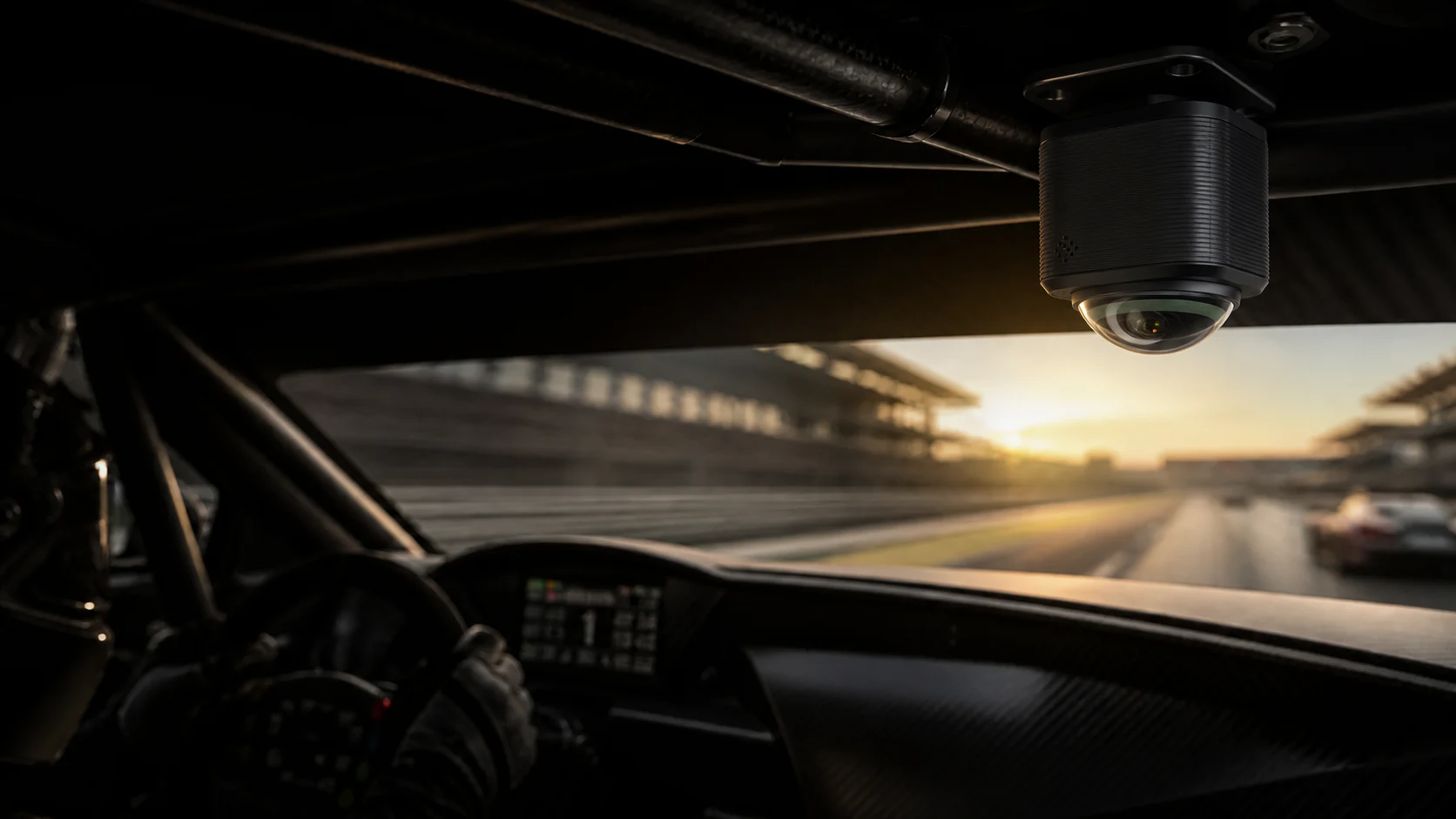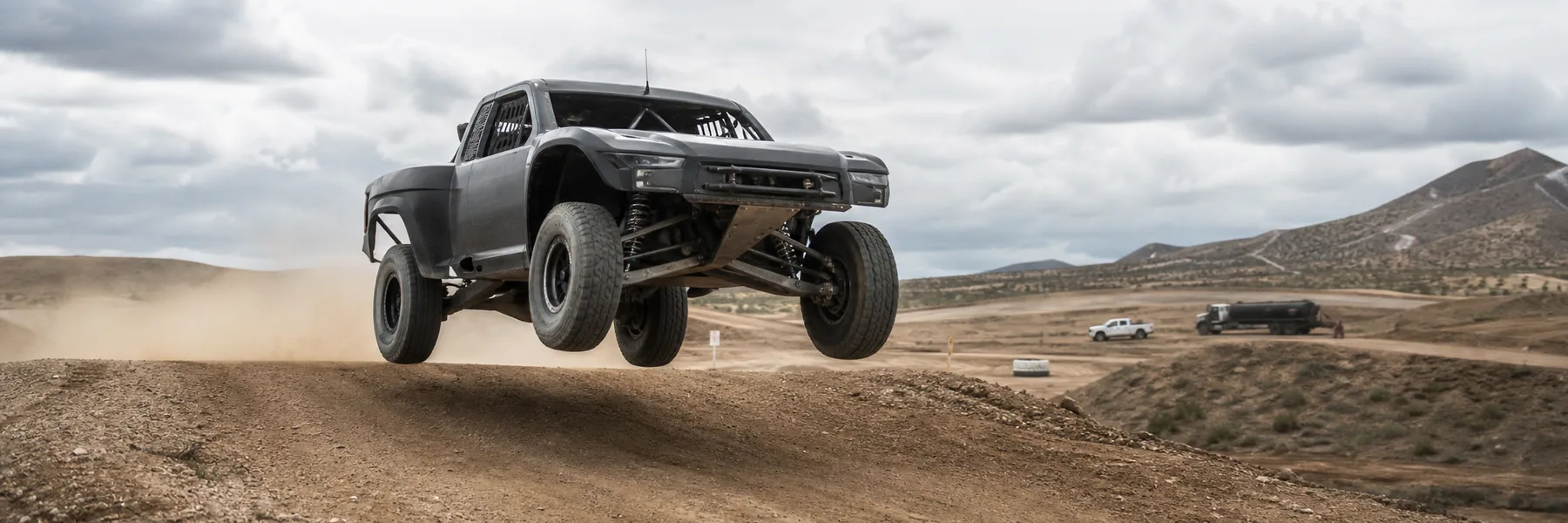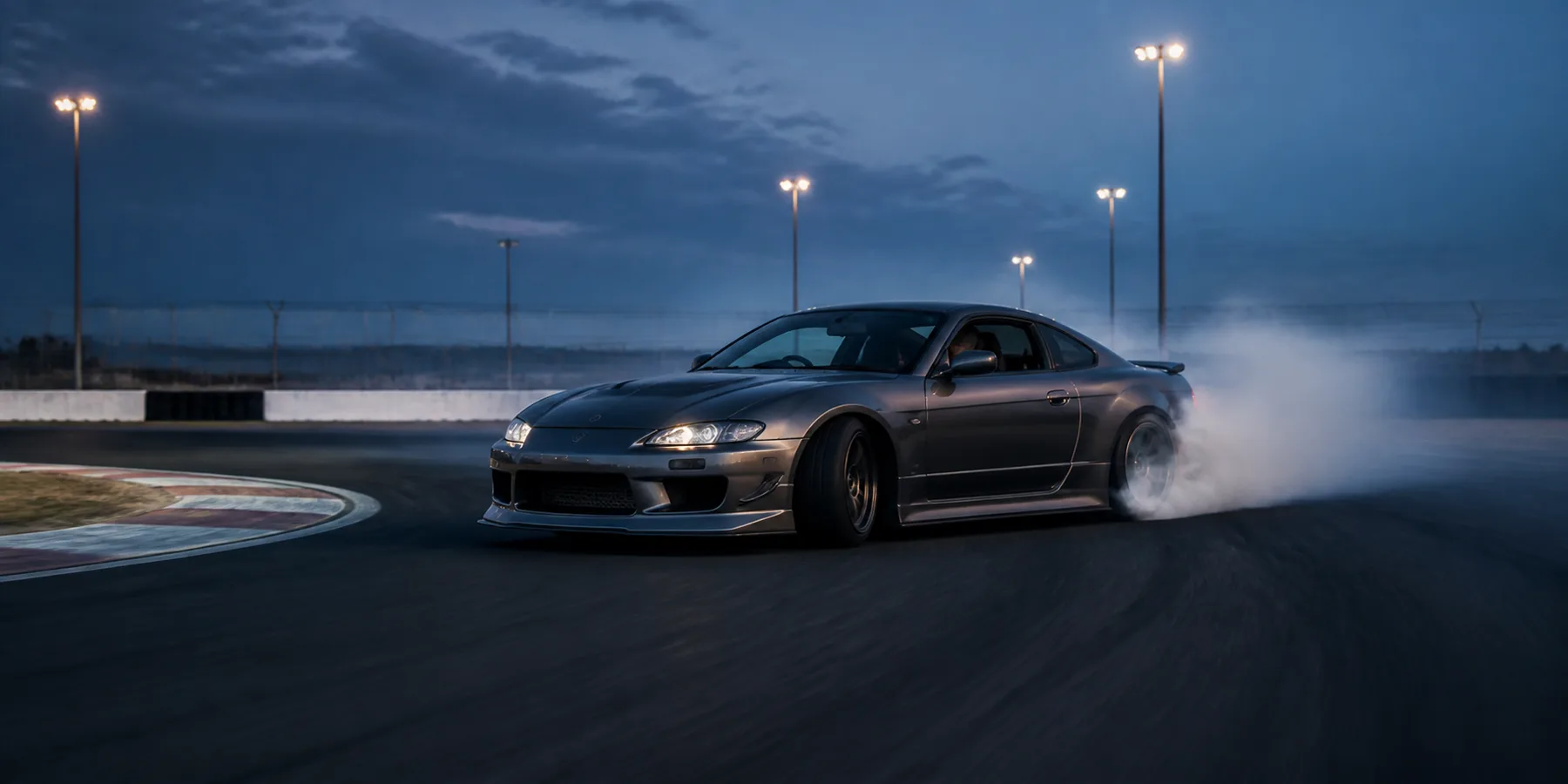
The decisive part of a drift often happens outside a fixed camera angle. Nose direction, counter-steer, the outside wheels, tandem distance and smoke may occupy several directions at once.
Keep the whole movement first. Choose the direction later.
Camorace Max panoramic recording means a single turn does not need one permanent viewing direction. After the run, reframe around vehicle attitude, driver input or tandem proximity and reduce the chance that rotation moved the subject out of frame.
Speed and G-force provide entrances into longer practice recordings, making sections with major speed change or lateral load easier to locate.
Keep the whole view
One recording preserves the cabin, circuit and the space around the car.
Find the movement
Use speed, G-force or a manual marker to reach the target drift.
Choose the view later
Reframe around the nose, driver or following car after the run.
Prepare the output
Adjust both clip range and viewing direction before export.
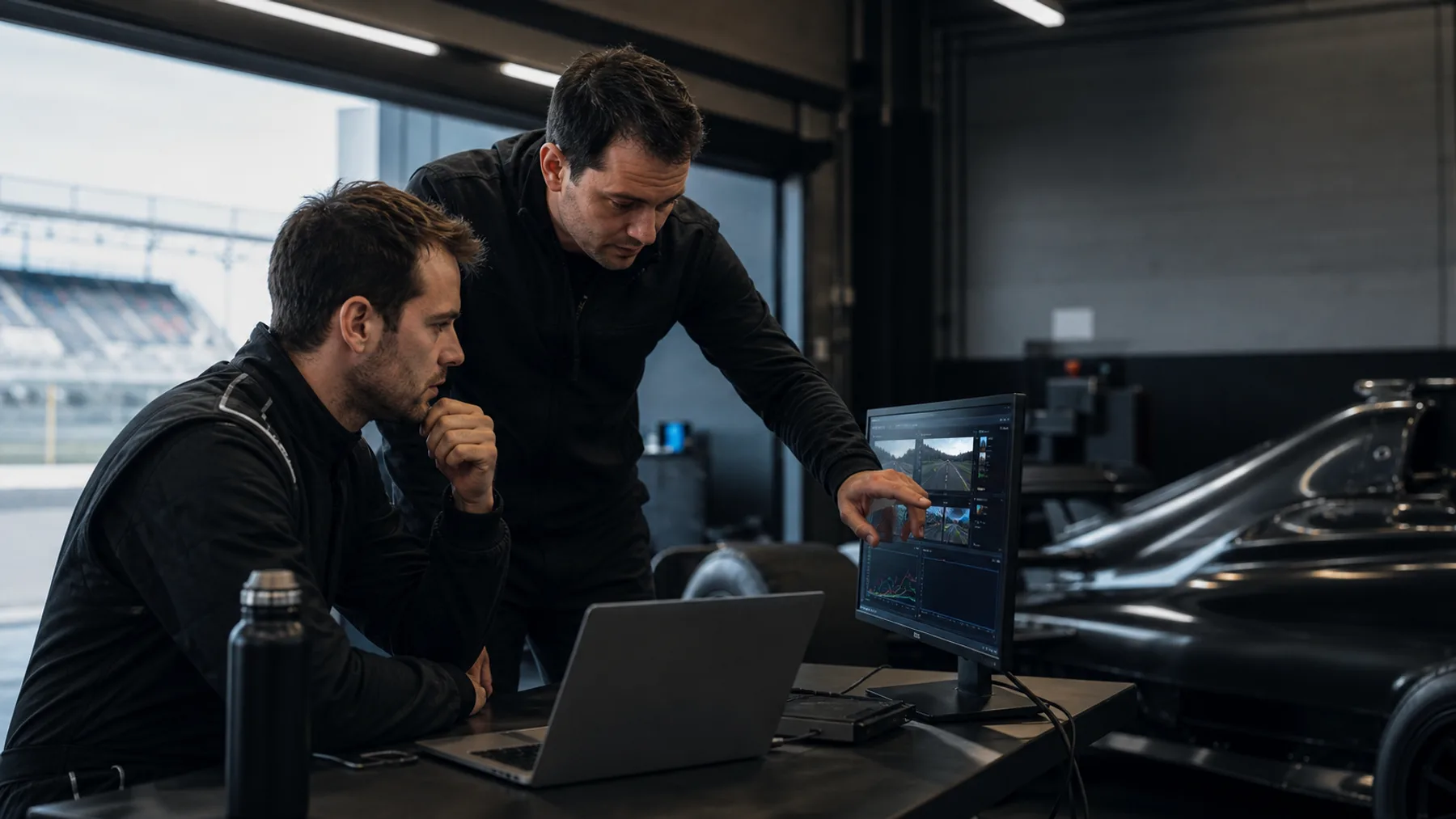
One original for analysis and creation.
Drivers focus on entry speed, correction and continuity. Engineers focus on load and vehicle response. Content teams need a stable subject and clear visual rhythm. A panoramic original supports these tasks without requiring three independent recordings.
Viewing direction and clip range remain adjustable for landscape, vertical and other publishing formats.
Less capture preparation, more choice afterwards.
More fixed cameras increase mounting, power and media-management work. Panoramic recording does not replace every specialist camera; it provides a complete foundation that covers uncertain directions and postpones the final choice until review.