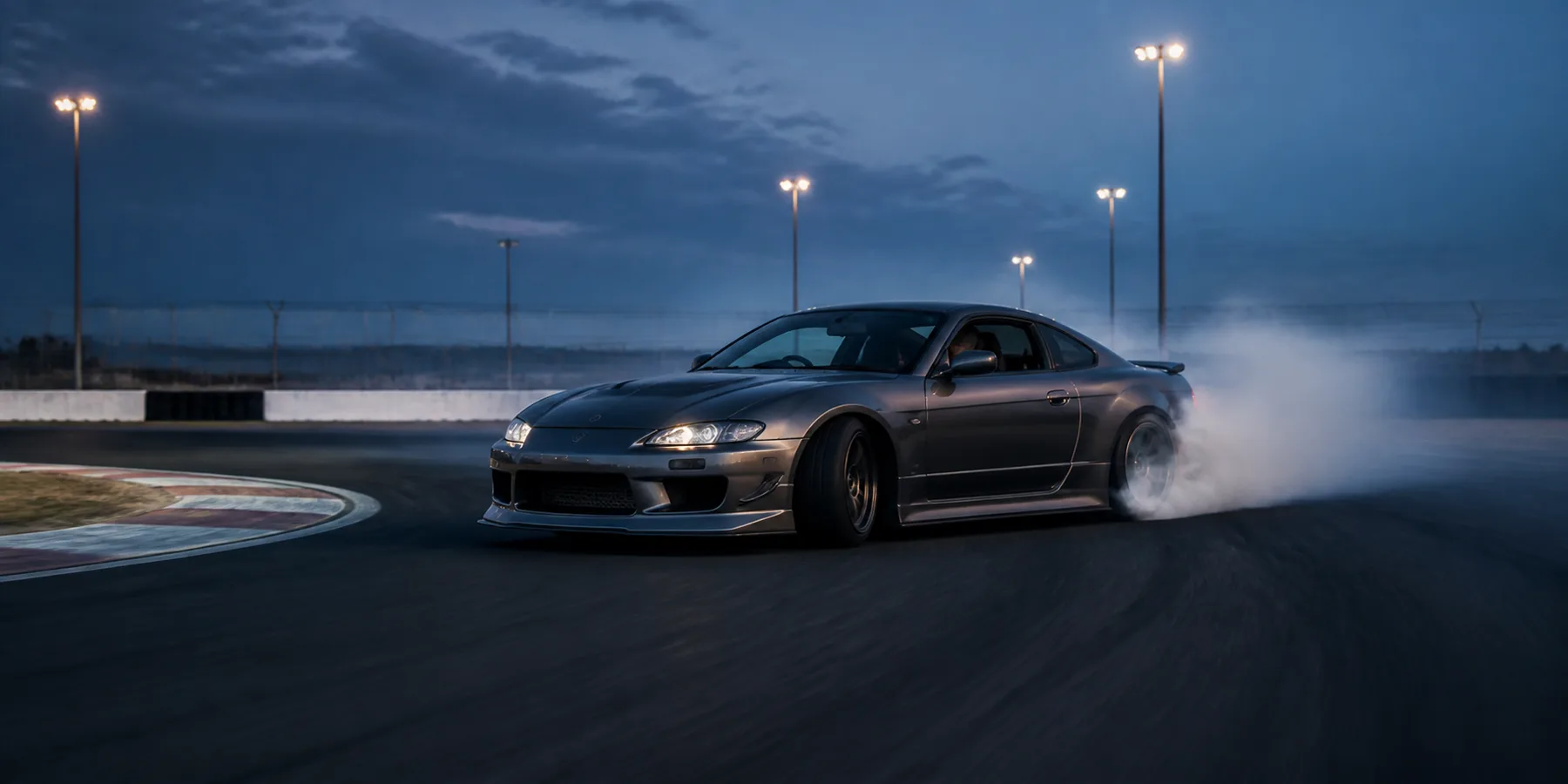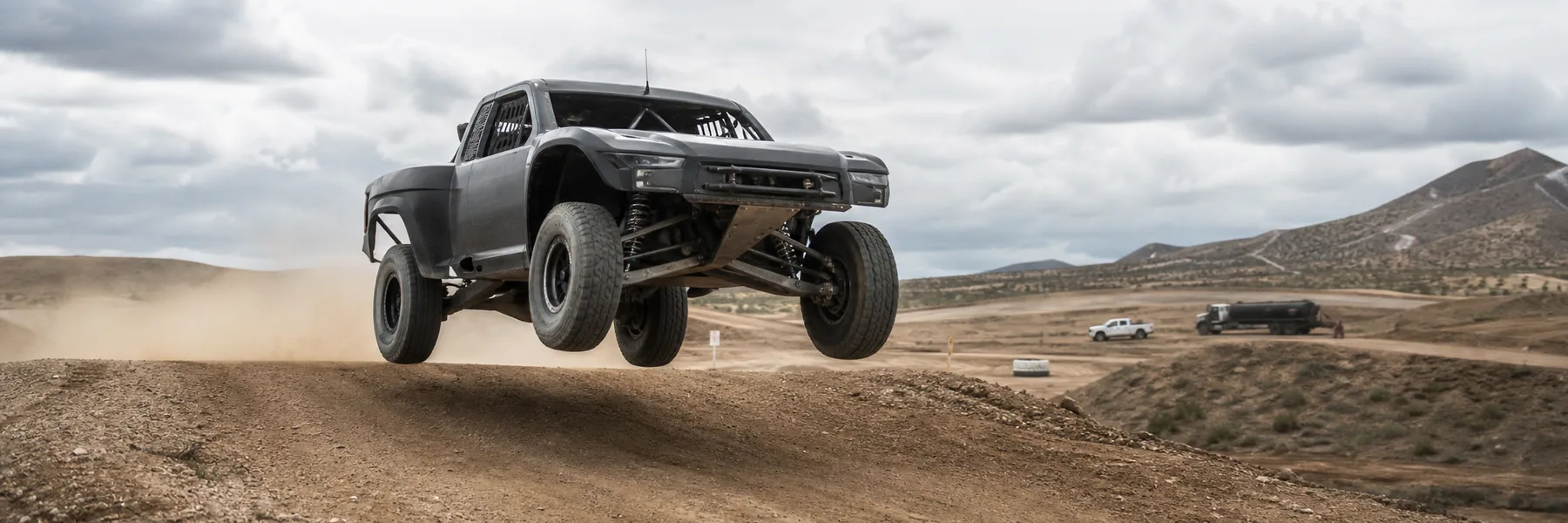
The decisive short-course sequence is brief. Approach, take-off, flight, landing and recovery may occupy only a few seconds. An isolated impact number cannot explain how it happened.
Use peak G to find the landing, then open the entire sequence.
Camorace Max synchronises peak G with panoramic video, speed and route. Select the peak and playback returns to the impact while the timeline keeps the approach, flight and vehicle response after landing.
Top speed provides another entry for fast straights or the speed-building phase before repeated terrain. Together they reduce search time across a long practice session.
Record the approach
Preserve entry speed, line choice and vehicle attitude.
Locate the peak
Peak G points to the landing or strongest impact.
Open the sequence
Review the moments before flight and after touchdown.
Compare passes
Check differences across laps, lines or setup changes.
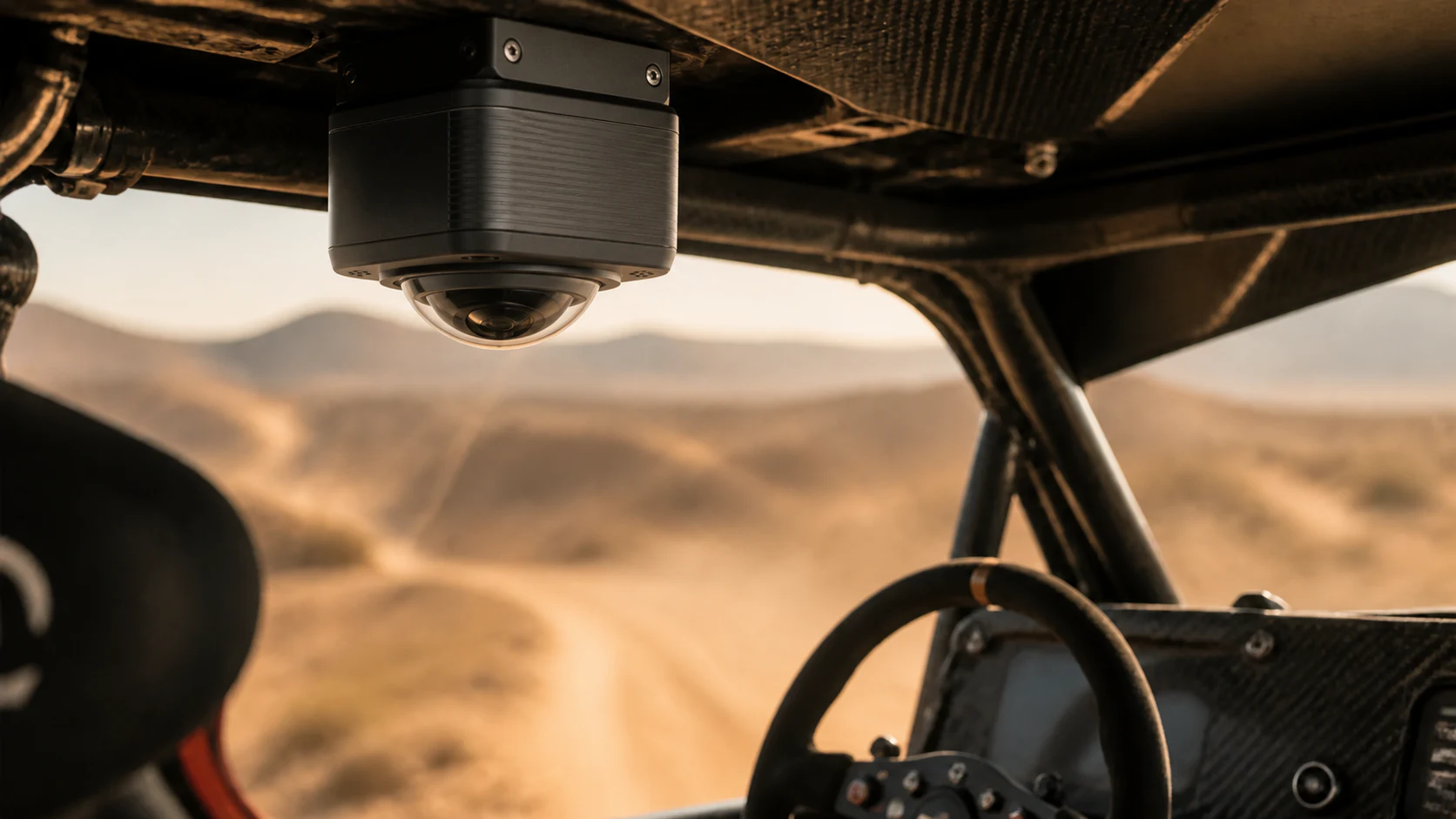
Data locates the impact. Video explains it.
Suspension compression, landing angle, driver input and terrain shape all contribute to an impact. The metric first answers where; panoramic footage then helps explain why.
Comparing several passes reveals whether a different approach speed or line improved landing attitude instead of judging a single peak alone.
One record for setup and driving review.
Drivers, engineers and mechanics can discuss the same time point when evaluating vehicle behaviour. Content teams can also choose a stronger viewing direction and clip length from the complete movement.