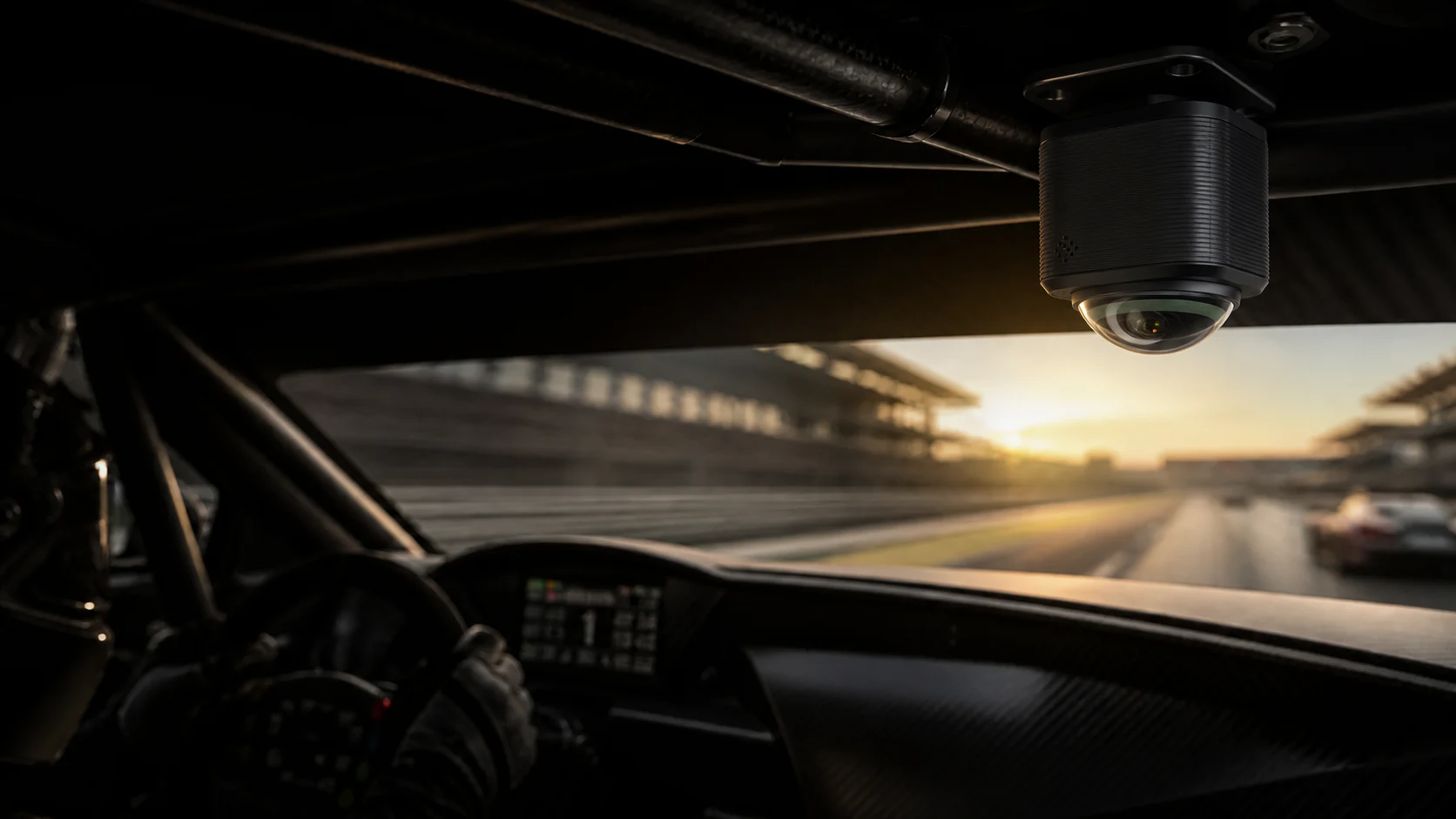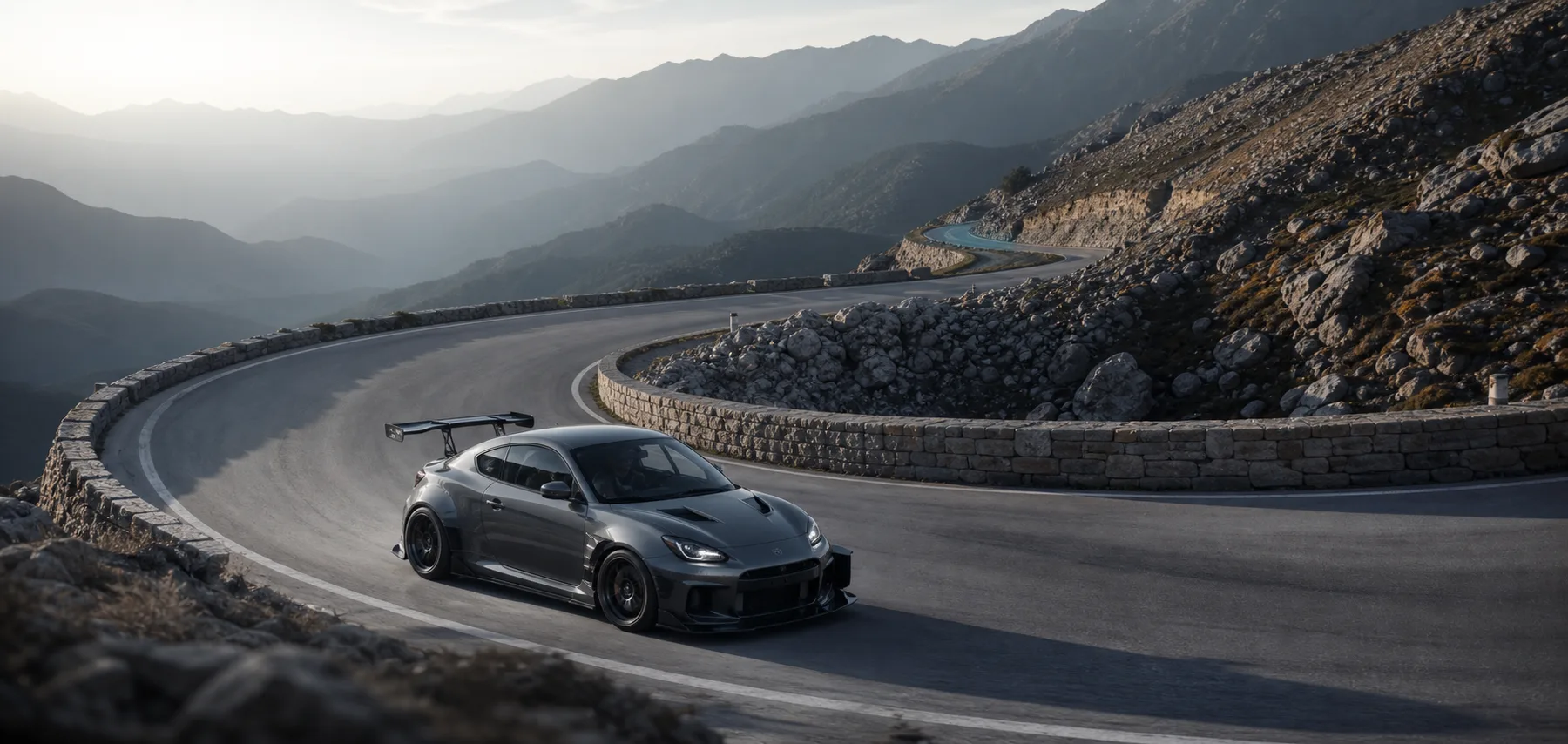
A hill climb follows one continuous route with dense corners, changing elevation and changing light. It cannot be divided into laps like a circuit session, yet its key road sections still need to be found quickly.
Without a lap list, key data becomes the entrance.
Top speed locates the fastest road section. Peak G helps find hard braking, compression or sustained load through linked corners. Both remain synchronised with GPS route and panoramic video.
Selecting a metric returns playback to the exact road position and keeps the approach and exit. Road features, corner shape and driver input can then refine the section further.
Record the ascent
Route, video, speed and G-force continue from start to finish.
Choose a metric
Use top speed or peak G to enter the key road position.
Read the route change
Review corner shape, gradient, light and driver input around it.
Prepare the section
Create an adjustable segment for review, discussion or output.
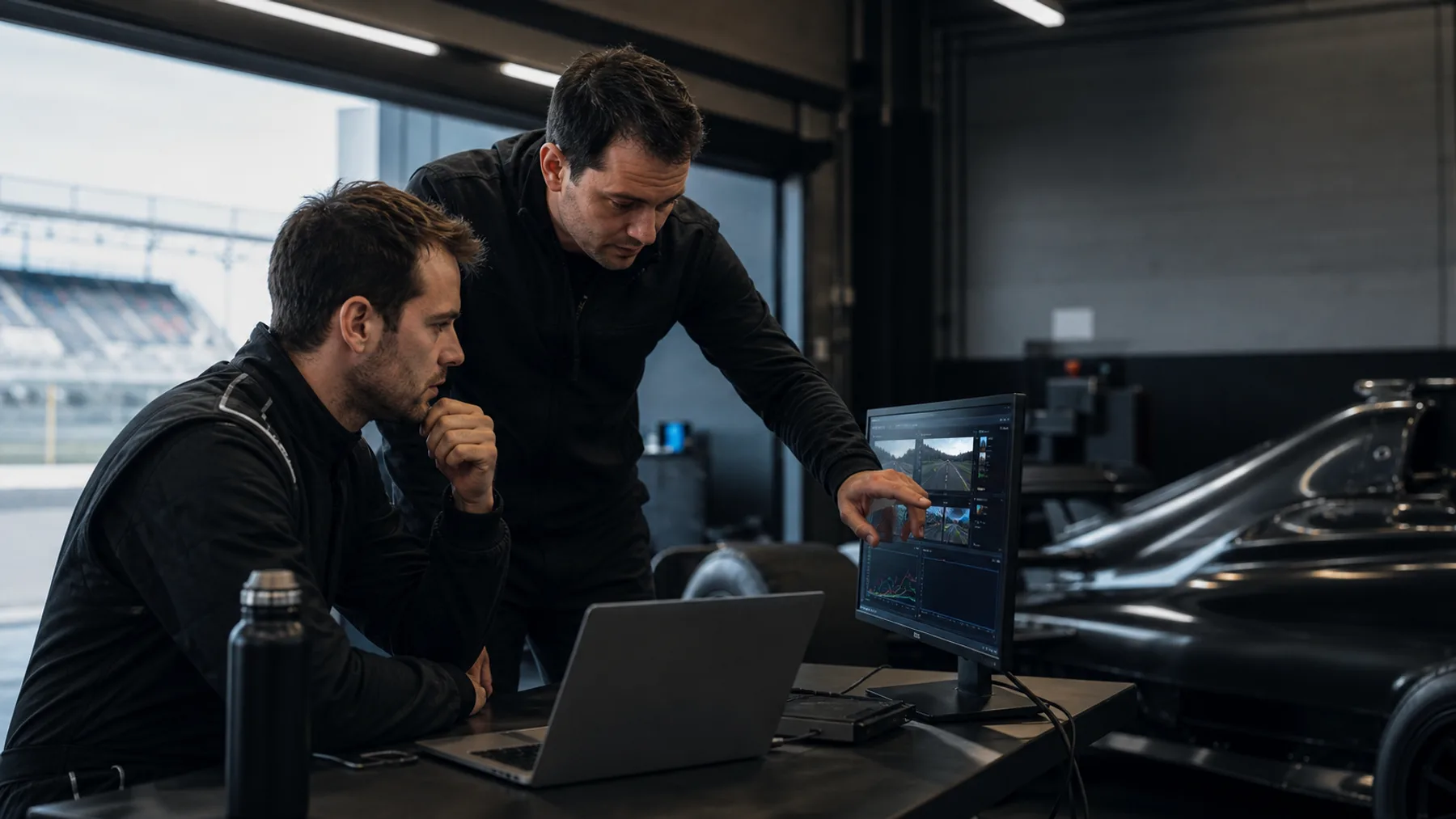
One route can still have a clear review order.
A hill climb does not need to imitate circuit-lap logic. Speed and load along the route divide the ascent into useful driving questions: high-speed stability, braking points, hairpin transitions and corner-exit acceleration.
Panoramic footage preserves the mountain-road view, driver movement and vehicle surroundings when light and corner direction change rapidly.
Build a benchmark for the next run.
Conditions may differ from one run to another, but a consistent route, data and video structure still creates a useful reference. Material can accumulate by road section, metric or manual marker over time.